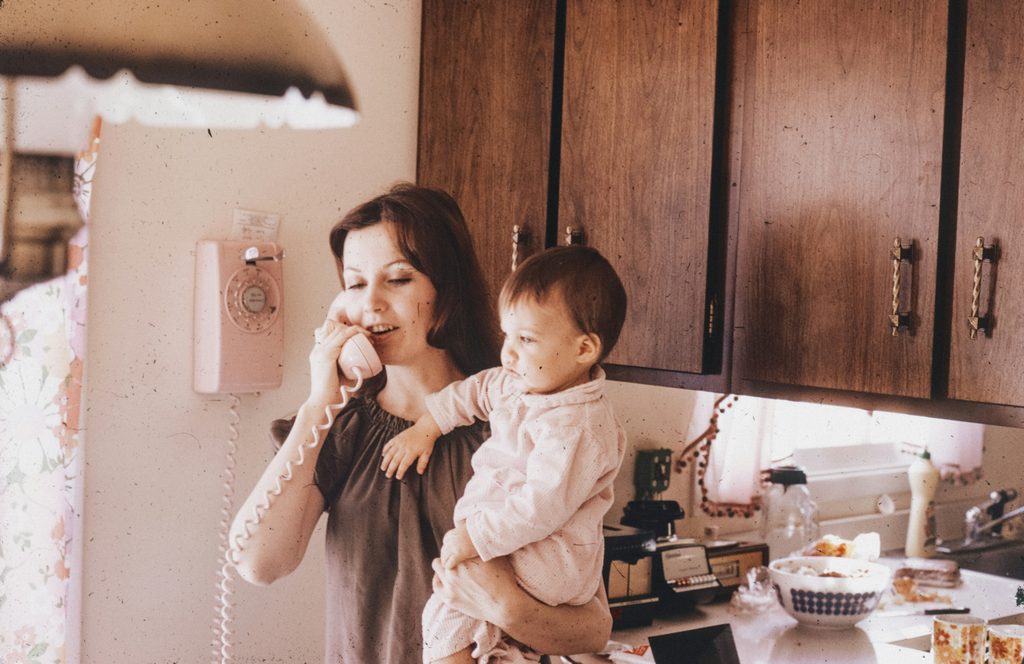
There is a significant body of scholarship on the rise and fall of ‘the housewife’ in twentieth-century Britain. In dialogue with this important research, this part of the project aims to historicise the historical origins of ‘the stay-at-home mother’. In conjunction with archival research, our team has conducted oral history interviews in Manchester and Cheltenham to explore when, where and how the term ‘stay-at-home mother’ gained currency and whose experiences it captured.
Key research questions include:
- How was being a stay-at-home mother perceived as something different from being a housewife, and what might that tell us about the relationship between mothering and domesticity?
- How does the rise (and fall?) of stay-at-home motherhood complicate our understanding of the history of women and work?
- To what extent was being a stay-a-home mother understand as an experience, rather than an identity?
- What generational shifts and insights are revealed within oral history interviews about stay-at-home motherhood?