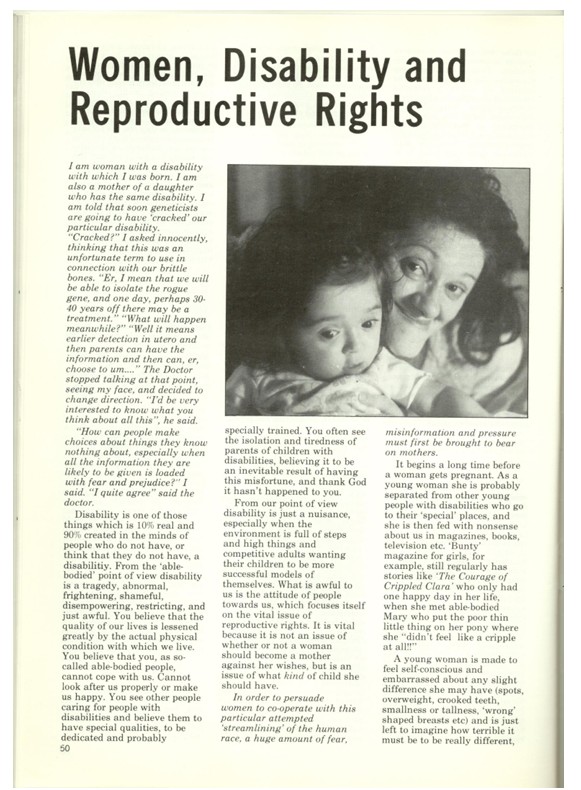
Much has been written about the changing experience of motherhood and how it was shaped by an expanding welfare state, strengthening feminist movement, and growth in women’s economic agency during the twentieth century. But where do disabled women fit within these familiar narratives? This strand of the project examines how the politicisation of disability has shaped disabled women’s relationship to motherhood in the second half of the twentieth century. It demonstrates how the stories of disabled mothers are crucial to understanding the role of self-advocacy within the broader history of motherhood.
Key research questions include:
- How did disabled women navigate medical, social, and cultural discrimination throughout pregnancy, birth, and parenting?
- In what ways have disabled women collectively critiqued the structures and attitudes which question their right to be mothers?
- How has motherhood acted as a source of community, affirmation, and joy for disabled women?
- Has the stigma surrounding disabled motherhood eased over time? How is it shaped by different experiences of disability and impairment?
- How do disabled women’s experiences inform our understanding of the complex intersectionalities of motherhood?